Contents
The S-300, known to NATO as the SA-10 Grumble in its first versions, is a family of surface-to-air missile systems developed in the Soviet Union. Work on the S-300P began in 1967 under the Almaz Central Design Bureau1, and the system entered operational service in 1978. Army Recognition describes it as built to defeat aircraft and cruise missiles and to protect fixed sites such as government buildings, command posts, airfields and industrial plants. A first battery combined launchers that carry four missiles each with a single engagement radar, and the family has been exported to at least 14 countries2. Russia and Ukraine both field it, and Russia has also fired its missiles at ground targets in Ukraine since 2022: Ukraine’s commander-in-chief said in August 2024 that S-300 and S-400 missiles had been fired 3,008 times3 at targets in the country.
Design and development
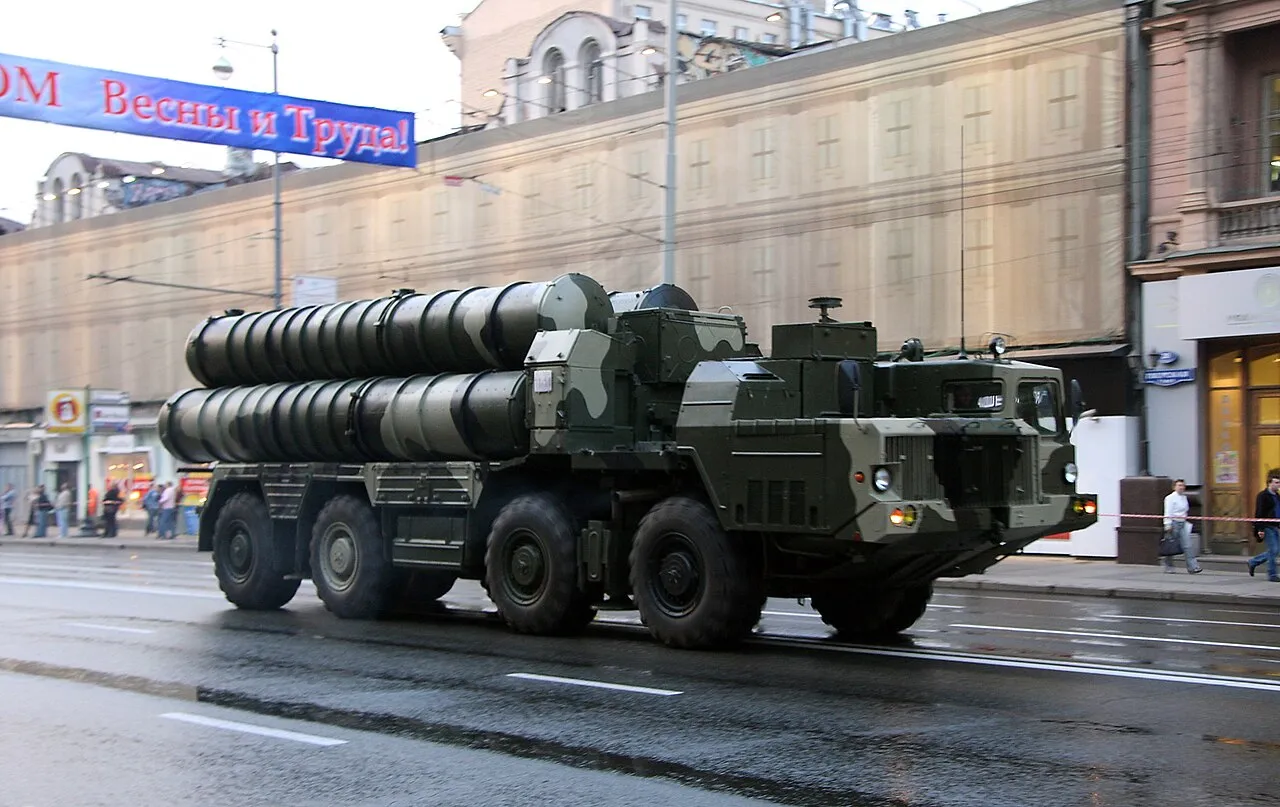
CSIS writes that the S-300P was meant to replace the S-25 Berkut and S-75 Dvina1 and to counter the new threat of long-range air-launched cruise missiles. The first version was semi-mobile4. Its launcher is a trailer with four missile tubes on a hydraulically raised frame, and its emplacement time was stated as over 30 minutes. Each missile is ejected from its container by gas to a height of about 25 m before its motor fires. A first-generation battery had three launchers and one 5N63 ‘Flap Lid’ engagement radar and could engage up to six targets with 12 missiles2, while the 36D6 ‘Tin Shield’ surveillance radar served at regiment and brigade level.
Army Recognition dates the fully mobile S-300PS to 19825, with launchers on the MAZ-7910 8x8 truck chassis and a deployment time of five minutes. A separate system for the ground forces4, the S-300V, was developed to add ballistic missile defense; some of its elements entered service in 1983 and full deployment came in 1988. In 1994 the United States acquired components of the system from Belarus1, and in 1995 it bought missiles, launchers and a command element for testing.
Specifications
The S-300P launcher trailer is towed by a MAZ-543 8x8 or a KrAZ 6x6 truck. Army Recognition gives the MAZ-543 a 525 hp D12A-525 V-12 diesel2, a total weight of 42,150 kg, a top speed of 60 km/h and a road range of 650 km. The missiles themselves are large: CSIS gives the 5V55K and 5V55R a length of 7.25 m1 and the 48N6 7.50 m, all with a diameter of 0.51 m. Ukrainska Pravda gives the 5V55R a weight of around 1.66 tonnes6 and the 48N6 one of around 1.8 tonnes.
Armament and protection
Each launcher carries four missiles in sealed canisters2. CSIS lists the 5V55K at up to 47 km, the 5V55R at 75 km and the 48N6 at 150 km, with high-explosive fragmentation warheads of 133 kg or 143 kg. The export S-300PMU2 fires the 48N6E2, for which Army Recognition gives a range of 3 to 200 km7 and altitudes up to 27 km; one 83M6E2 command post controls up to 12 launchers. The ground forces’4 S-300V fires the 9M83 at aircraft up to 75 km and the 9M82 up to 100 km1 from four-tube 9A83ME and two-tube 9A84ME launchers, all with 150 kg fragmentation warheads.
The ability to strike ground targets is old. TWZ cited a 2011 report from the Belarusian outlet Naviny that the S-300 could hit ground targets tens of kilometers from its firing positions8, and Ukrainska Pravda recorded that three Russian air defense regiments fired five missiles at ground targets6 on the Telemba range in May 2011. The same article notes that these warheads, made to destroy aircraft and missiles, lack the penetrators needed against hardened targets.
Variants
- S-300P and S-300PT (SA-10A): the original semi-mobile version on trailers; the PT-1 upgrades brought a 5V55KD missile reaching up to 75 km4.
- S-300PS and S-300PM (SA-10B): launchers, radars and command posts on the MAZ-7910 8x8 truck4; Army Recognition gives the PS a five-minute deployment time5.
- S-300PMU, PMU-1 and PMU-2 Favorit: export versions; the PMU-2 was first shown at MAKS 19977 in Moscow.
- S-300V (SA-12 Gladiator/Giant4, later SA-23): the ground forces’ tracked system, and its export S-300VM Antey-2500, which extends the anti-aircraft range up to 200 km1.
- S-300F (Fort4): the naval version2.
- RM-48U: a refurbished dummy based on retired 5V55 or 48N6 missiles, which fits S-300 and S-400 launchers6 and which Ukrainska Pravda says Russia turns into offensive weapons or decoys; Ukraine’s military intelligence first described it as a training missile and says Russia built more than 200 in 2025 and aims for over 480 in 2026.
Operators and service
Russian forces fielded about 1,900 S-300 launchers at the 2000 peak, and around 800 were active by 2017. Russia gave four second-hand battalions to Belarus and five to Kazakhstan in 2015, deployed S-300P units to Crimea after the 2014 annexation and to its naval base at Tartus in Syria in October 2016, and, by the account of Russian state media, sold S-300V and S-300P systems to Iran in October 20161. Greece operated an S-300PMU1 on Crete, acquired after the Cyprus missile crisis and first fired in 2013. In the 2020 Nagorno-Karabakh war, Armenia’s defense ministry claimed that its S-300s had downed three Azerbaijani drones4.
Ukraine had around 100 batteries4 when Russia invaded in February 2022. Slovakia gave Ukraine its S-300 system that April, and Prime Minister Eduard Heger said the gift did not make Slovakia a party to the war9; President Joe Biden said the United States would move a Patriot system to Slovakia in return. On 15 November 2022 a missile killed two people at Przewodów in Poland, and NATO’s secretary general said the incident was likely caused by a Ukrainian air defense missile10; Poland’s president said it could have come from an S-300.
In July 2022 Mykolaiv’s governor, Vitaly Kim, said Russia had fired 12 S-300 missiles in a land-attack role8 at his region. Ukrainska Pravda counts the strike on Zaporizhzhia of 30 September 2022 among the deadliest: Russia fired 16 S-300 missiles at the city and its outskirts, four of which hit the area around a car market and a civilian convoy, killing 32 people and injuring 118. In the night to 10 February 2023, Ukraine’s Air Force said, Russia fired up to 35 S-300 missiles at Kharkiv and Zaporizhzhia oblasts11, a number its spokesman Yurii Ihnat called probably a record12. Donetsk’s governor said seven S-300 missiles had been fired at Sloviansk13 on 14 April 2023; Ukrainska Pravda later gave a final toll of 15 dead and 24 injured6. In August 2024 Oleksandr Syrskyi said that of the S-300 and S-400 missiles fired at ground targets, only 0.63% had been destroyed3, and that they had hit 4,293 targets, 3,196 of them civilian.
Similar vehicles
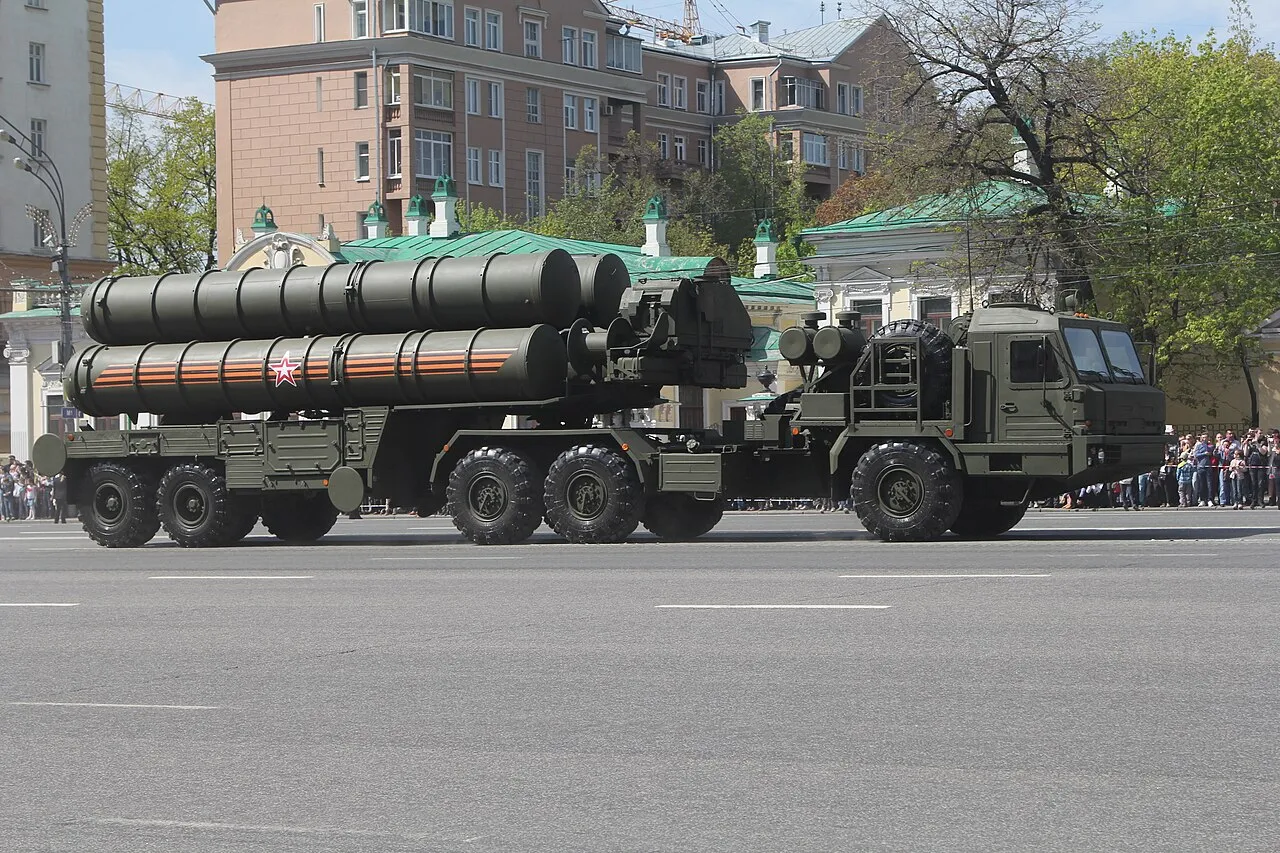
- S-400: the successor, for which 70 to 80 percent of the initial technology14 was adapted from the S-300, CSIS says.
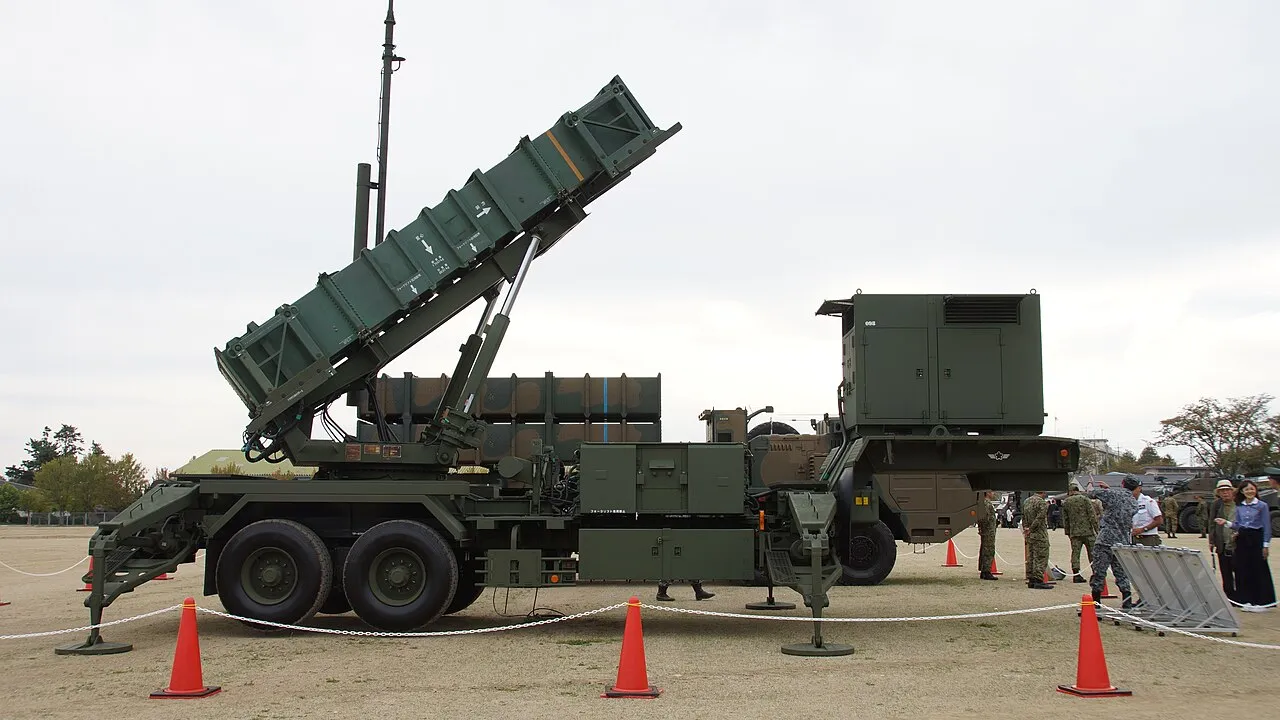
- MIM-104 Patriot: the US system; CSIS writes that the S-300P’s testing record shows performance similar to the PAC-21.
- S-75 Dvina: the older Soviet surface-to-air system the S-300P was designed to replace1.