Contents
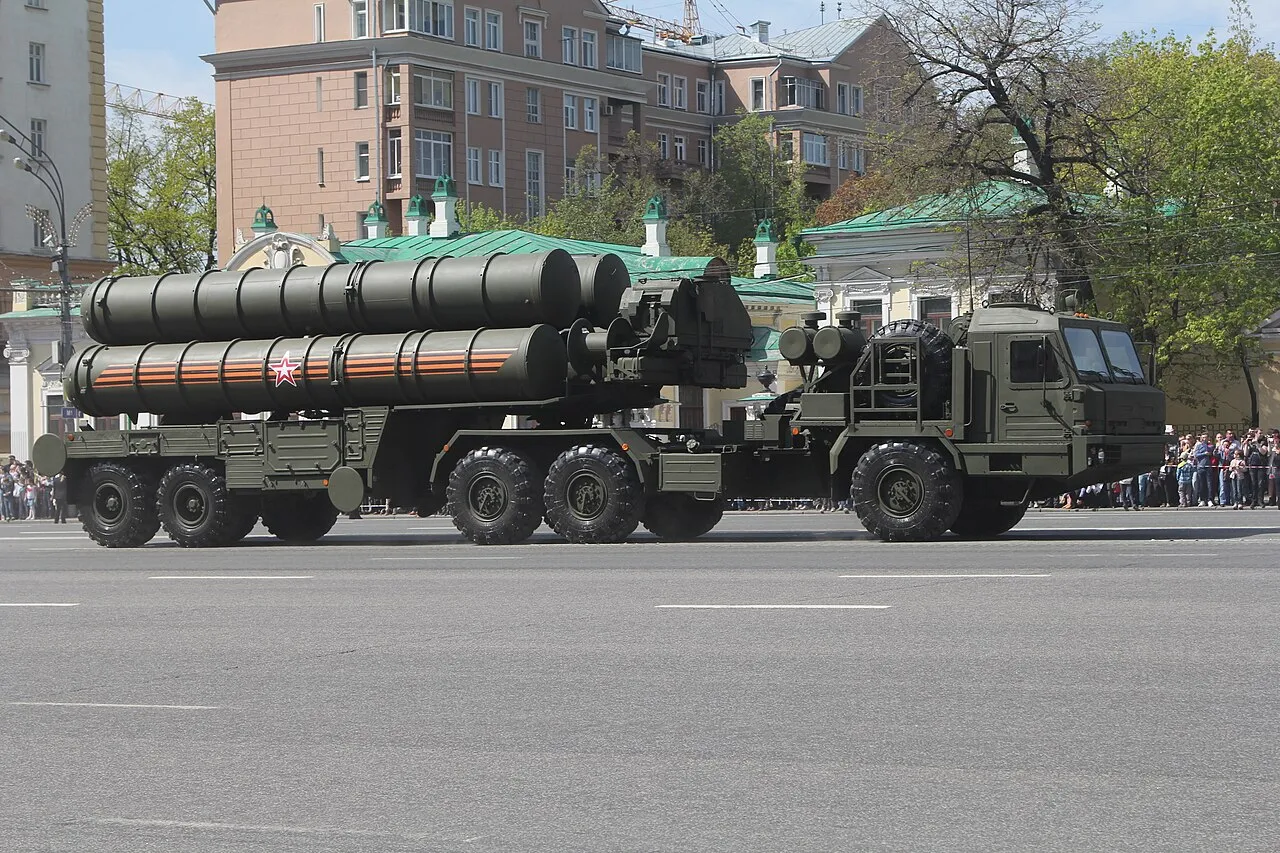
The S-400 Triumf, NATO reporting name SA-21 Growler, is a mobile, long-range surface-to-air missile system developed by the Almaz Central Design Bureau and produced by Almaz-Antey3. It is built to engage aircraft, drones and cruise missiles, with a terminal defense capability against ballistic missiles, and it succeeded the S-200 and S-300 in Russian service from 20071. An S-400 unit is a group of vehicles: radars, a command post and truck-drawn launchers working as one battalion. Beyond Russia, the system has gone to China and Turkey2 and to India4, and Belarus’s defense ministry said in June 2023 that a unit armed with S-400s had entered combat duty5 in Belarus.
Design and development
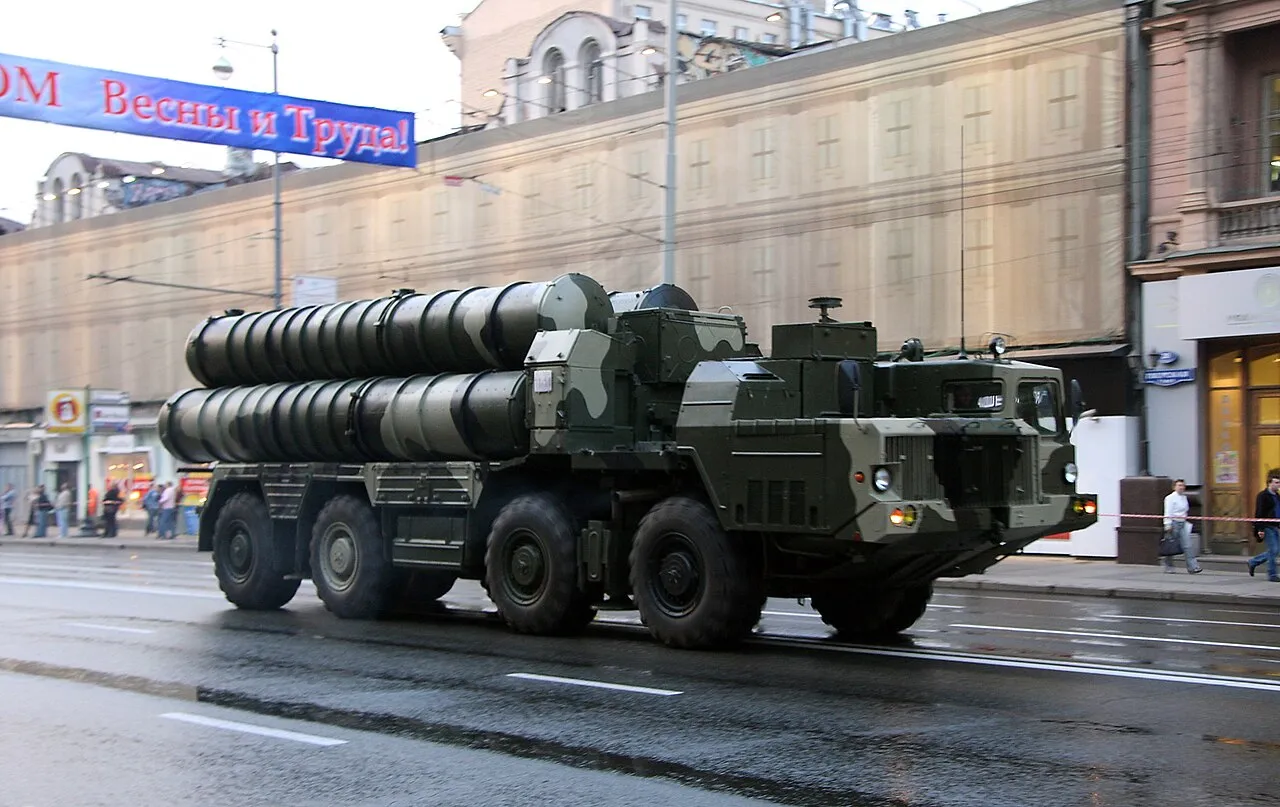
Russia began developing the S-400 in 1993, when post-Soviet budget limits restricted the design of an entirely new system. CSIS says that 70 to 80 percent of the initial technology was adapted from the S-300, including missile containers, launchers and radars. The project was first known as the S-300PMU3, and Almaz worked on it with the Fakel Machine Building Design Bureau and other enterprises6. Testing began in late 1999 or early 2000 at Kapustin Yar. The system entered service in April 20072, and the first units joined the air defense corps responsible for Moscow1.
A battalion spreads its tasks over several vehicles. The 92N6E fire-control radar rides on an MZKT-7930 8x8 truck, while the trailer-mounted 91N6E acquisition radar is credited by Army Technology with tracking up to 300 targets at up to 600 km. Control comes from the 55K6E command post on a Ural-532301 truck2. The Missile Defense Advocacy Alliance describes a battalion as a command vehicle, radars and eight launchers with 32 to 128 missiles7.
Specifications
The launcher is a semi-trailer: Army Recognition describes it towed by a BAZ-64022 6x6 tractor, steadied for firing by hydraulic jacks lowered on each side, and Army Technology names the MAZ-79100 series as an alternative base vehicle2. Designations vary between references, which list a 5P85TE2 transporter-erector-launcher and a trailer-mounted 5P85SE28. Army Recognition puts the time to set up from the traveling position at five to ten minutes3.
Armament and protection
Each launcher holds four missile containers; a container takes one 48N6-series missile or four smaller 9M96 missiles, so one launcher can carry up to 16 of the 9M96 type6. CSIS gives the 48N6 family a reach of up to 250 km against aircraft and 60 km against ballistic missiles, with a 143 kg high-explosive fragmentation warhead. Army Technology lists the 9M96 at up to 120 km, designed for direct impact on fast targets such as fighters, and the long-range 40N6 at a claimed 400 km. CSIS’s profile, last updated in 2021, calls the 40N6’s deployment status unclear and lists a hit-to-kill interceptor, the 77N6, as in testing1. Army Technology credits the system with engaging 36 targets at once at altitudes up to 30 km2. The S-400 can also fire the older missiles of the S-300PMU-1 and PMU-23, and it can be linked with the shorter-range Pantsir8 for close-in defense.
Variants
The first missile introduced with the system was the 48N6DM, also designated 48N6E32, an improved 48N6M. India’s order included 9M96E2, 48N6E2, 48N6E3 and 40N6E missiles. A naval version, the S-400F, was planned for the Kirov-class cruiser Admiral Nakhimov, using the land system’s missiles except the 40N6, for a range of up to 250 km7. In Indian service the system is named Sudarshan Chakra8.
Operators and service
Russia first set up S-400 regiments around Moscow, in Kaliningrad and in the Eastern Military District, and had received over 20 battalions by 20152. After Turkey shot down a Russian Su-24M in November 2015, Russia’s defense ministry said on 26 November that an S-400 had arrived at Hmeymim air base in Syria6. CSIS’s profile, last updated in 2021, also records S-400 units stationed in Crimea1.
China agreed in 2015 to buy six battalions1 and had received two regiments by July 20192. Turkey took delivery from July 2019, and Washington removed it from the F-35 program over concerns the S-400 could compromise the F-35’s stealth. The US imposed CAATSA sanctions on Turkey’s procurement agency on 14 December 20209. In July 2026 CRS reported that Turkey was seeking 40 F-35s and an end to those sanctions, while US law bars the transfer unless the executive branch certifies that Turkey no longer possesses the S-400, has given credible assurances it will not reacquire it, and has bought no other Russian equipment that would risk the F-3510.
India signed a $5.43 billion contract for five regiments in October 2018, with deliveries starting at the end of 20214. India’s air chief said in August 2025 that India had shot down five Pakistani fighters in May and a large aircraft at a distance of 300 km, and he attributed most of the kills to the S-400; Pakistan denied losing any aircraft8. In February 2026 India’s Defence Acquisition Council approved buying 288 more S-400 missiles11 to replace those used.
Ukrainian sources said an S-400 shot down a Ukrainian Su-27 over Kyiv on 25 February 2022, the second day of Russia’s full-scale invasion. Russia’s defense ministry said in April 2022 that an S-400 had downed a Ukrainian Mi-8 helicopter8. Ukraine’s military intelligence said in August 2023 that it had destroyed an S-400 on Crimea’s Tarkhankut Peninsula12. Oryx, whose list counts only losses shown in photos or video and grows as footage appears, records 34 S-400 launchers destroyed or damaged13.
Similar vehicles
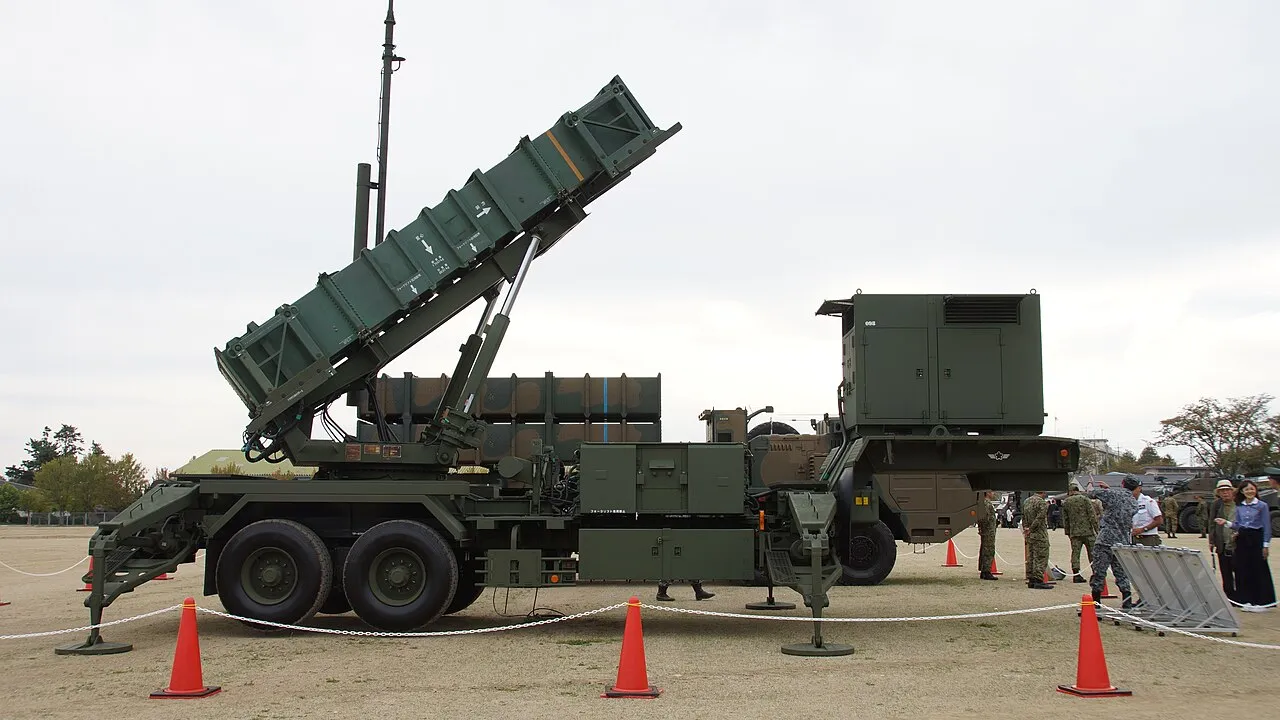
CSIS calls the S-400’s mission set roughly comparable to the US Patriot system (MIM-104 Patriot); its 2021 profile adds that, unlike some Patriot interceptors, the S-400 did not then use hit-to-kill ballistic missile defense. Its predecessor, the S-300, supplied most of its early technology1, and its successor, the S-500, entered Russian service in 2021. Serbia chose China’s HQ-9BE over the S-400, and Saudi Arabia, once interested in the Russian system, turned to the US THAAD8.